

Molecular Biosciences (MBS) Program
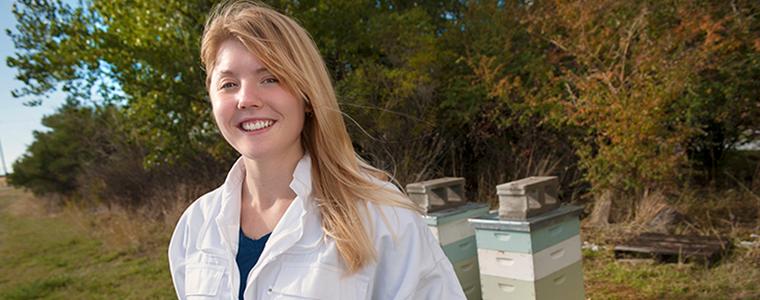



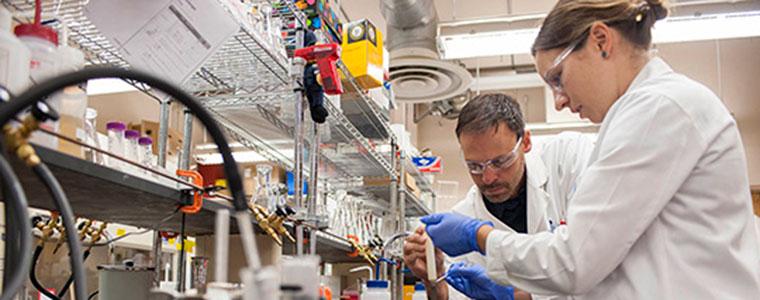


Click on an image to view as a slideshow.
The Molecular Biosciences (MBS) Program offers an interdisciplinary design towards a Doctorate in Philosophy. Students in the MBS program have the unique opportunity to pursue research across department boundaries, before selecting a specific area of study at the end of the first year.
In this program, first-year graduate students rotate in three different laboratories within their chosen areas of research interest. These rotations are chosen by the student based on interest and need to be communicated with the research faculty before the rotation. By the end of the first year, students determine their dissertation advisor. They are formally admitted to a specific department to conduct research leading to the completion of a Doctor of Philosophy. Final lab placement after rotations is decided by the MBS student and the Faculty Advisor.
The MBS Program is a competitive research opportunity that offers a stipend for the first year of study while students are exploring different research disciplines and seeking an appropriate advisor. Once the student moves into a chosen lab, funding will be provided by the student's dissertation advisor for the remaining years of study. In addition to the stipend, the MBS Program offers tuition waivers for five years of graduate school, which allows students more flexibility and decreases the burden when searching for research funding.
Research Areas:
Biofilm Sciences & Engineering | BioInspired Materials | Bioinformatics/Genomics/Proteomics
| Biological & Mathematical Modeling | Biomedical Sciences | Biophysics | Cell,
Developmental, & Molecular Biology | Chemical Biology | Ecology | Environmental
Microbiology | Immunology & Infectious Disease |
Life in Extreme Environments | Neuroscience | Plant Sciences | Virology
Cooperating Departments and Research Centers:
This interdisciplinary program brings together faculty, departments, and research centers across campus: Astrobiology; Chemical and Biological Engineering; Chemistry and Biochemistry, Computer Science, Earth Sciences, Ecology, Land Resources and Environmental Sciences, Mathematics, Microbiology & Immunology, Plant Sciences and Plant Pathology, Center for Biofilm Engineering, Center for BioInspired Materials, Pollinator Health Center, and the Thermal Biology Institute to provide students with laboratory instructions to become successful research scientists.
To possibly gain rotation students, research faculty can present their research to current MBS students during orientation (August) and to prospective MBS students during recruitment weekend (typically in February). Please email mbprogram@montana.edu and/or any member of the Faculty Committee with questions and/or to reserve time to meet.
Application Procedures:
Applicants should be prepared to submit the following materials during the online application process. Any additional documents can be mailed to: Montana State University, The Graduate School, P.O. Box 172580/108 Montana Hall, Bozeman, MT, 59717.
Every applicant to MSU is required to fill out and complete an application and pay the $70 application fee (US Currency). The fee must be paid before the application is processed. Only completed applications will be reviewed. Applications submitted to the Molecular Biosciences Program will only be considered for MBS program admission; students also interested in a specific department should apply to that department directly (this will require a separate application for each department).
- Three (3) Letters of Recommendation. During this online process, you will be asked to provide information about your references. The electronic process will prompt each reference to submit a signed reference letter on your behalf. Request letters from people who are able to judge your ability to succeed in graduate school, e.g., your undergraduate professors, an advisor or supervisor during an internship, other faculty. Please do not ask for letters of recommendation from family members, friends, roommates, etc.
- GPA. A minimum undergraduate GPA of 3.00 is required (on a scale of 4.00=A).
- During the application process, you will be prompted to answer questions about previous research experiences and current research interests. Each will be a statement of a maximum of 1,000 words.
- A personal statement that describes your educational objectives for attending graduate school at Montana State University.
- Transcripts from all previous universities attended. You can upload unofficial transcripts during this online process; however, MSU must receive official transcripts directly from the university(s) attended. Please have them sent electronically to: gradschool@montana.edu or by mail to: Montana State University, The Graduate School, P.O. Box 172580/120 Montana Hall, Bozeman, MT, 59717. (Applicants who are undergraduate alumni of MSU do not need to submit official transcripts).
International Applicants: please see International Application Process for additional information and requirements.
*It is recommended that applicants for the Ph.D. program have a Bachelor’s or Master’s degree with a solid foundation of science courses.